Tre klick till lugn: Så väljer du en avslappningsbakgrund som känns som att stiga in i en Miyazaki-värld
Du stänger ditt laptop efter back-to-back Zoom-möten — och skärmen känns fortfarande som en fortsättning på din att-göra-lista. Den här 3-stegsguiden visar dig exakt hur du väljer en avslappningsbakgrund som signalerar trygghet, mjukhet och stillhet — som att stiga in i en tyst sjöscena från [Japanstilens landskap 8K-bakgrundspaket](/packs/japanese-style-landscape-8k-072a1d7f).
Du stänger ditt bärbar dator, men dina axlar förblir spända, dina ögon är fortfarande vaksamma och skärmen pulserar fortfarande med återstoden av din sista Slack-meddelande.
Din skrivbordsbild är inte en neutral bakgrund. Den är det första visuella tecknet som ditt nervsystem möter när arbetet är slut — och den kan antingen förstärka stress eller mjukt leda dig in i vila. Rätt avslutningswallpaper ser inte bara lugn ut. Den känns som att andas ut. Som att gå ner från en överfylld tågplattform till en stilla skogsväg. Som det ögonblicket då världen mjuknar vid solnedgången.
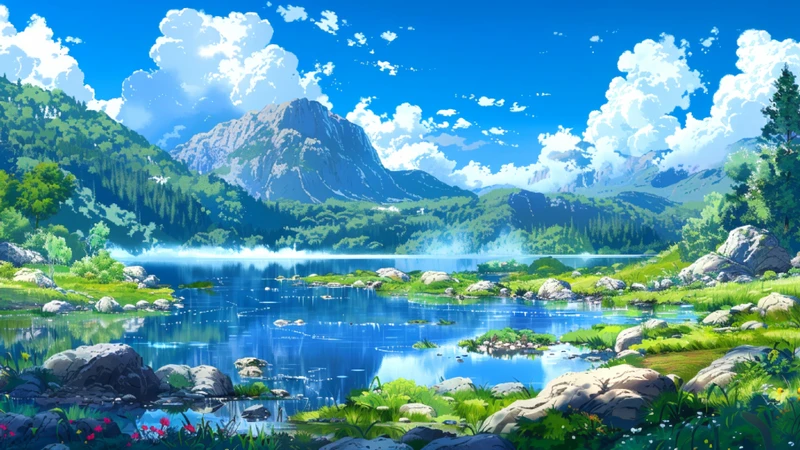
Här är hur du väljer en — i tre medvetna, forskningsbaserade steg.
Steg 1: Förskjut fokus från "vacker" till "pausande"
Ditt hjärna bearbetar visuell information snabbare än ditt medvetna tänkande. Det betyder att även om du tycker om en högkontrastig stadsskåne kan den öka kortisol istället för att lugna. Lugg är inte bara om skönhet. Det handlar om visuella signaler som säger säkerhet: mjuka kanter, låg kontrast, mjuka färgövergångar och öppen plats.
Tänk på din efterarbets-skärm som en gräns — inte som en gallerivägg. Du väljer inte för beundran. Du designar för fysiologisk nedstigning.
- Sök efter visuell friktion: Har din nuvarande wallpaper skarpa linjer, blinkande reflektioner, tråkiga texturer eller emotionellt laddade ämnen (t.ex. brådskande ansikten eller stormar)? Om ja, håller den troligen din varningssystem aktivt.
- Välj färger som andas: Mjuk grå, varm beige, dimmig blå, eller matt sage — inte för att de är populära, utan för att de efterliknar naturligt kvällslys som säger till kroppen: Det är okej att sakta ner.
- Prioritera enkelhet framför detaljer: En ensam trädstam mot en gradienthimlen fungerar bättre än en detaljerad stadshimmel — även om den senare är tekniskt mer imponerande.
Försök detta: Öppna din wallpaper-mapp och ta bort allt med starka diagonaler, mörkröda eller orange färger eller kaotisk komposition. Behåll endast bilder där dina ögon landar mjukt — inte hoppas.
Steg 2: Prioritera ljus, djup och lätt rörelse — inte bara stilla bilder
Riktigt lugn är inte tomhet. Det är en stilla livskänsla. Tänk dig morgondimma som stiger från sjön eller solens ljus som glider över fjällens kant — dessa små förändringar lockar uppmärksamheten utan att kräva ansträngning.
Det är också varför ren minimalism ofta misslyckas: den kan kännas kall, inte lugn. Det som verkligen hjälper dig att slappna av är en mild visuell rytm som gör att dina perifera syn kan vila, samtidigt som tankarna försöker sig på att slappna av.
- Sök efter mjukt ljus, inte bara ljusstyrka: Morgonljus, månljus på vattnet, guldglöd vid solnedgången — dessa skapar varm säkerhet genom mjuk kontrast, inte stimulerar nervsystemet.
- Sök efter djup med tydlig struktur: Klart förgrund (t.ex. ris eller stenar), mellanrum (tyst sjö eller fält) och bakgrund (oskarpt berg eller himmel), simulerar hur ögonen naturligt slappnar av — lätt växlar fokus, inte fastnar på något.
- Observera dold rörelse: Vattenpåsar, flytande dimma, moln som rör sig utanför bildens ram — dessa aktiverar parasympatiska nervsystemet — minskar puls, fördjupar andetag, utan att utlösa varning.
Försök detta: Placera handen på skärmen och sudda upp synen lite. Fungerar bilden fortfarande som en enhet och ger trygghet? Om den blir kaotisk eller spänd, så passar den inte till din vila.
Steg 3: Anpassa till din kvällsrutin — inte bara skärmstorlek
Wallpaper ska matcha din kvällsrutin, inte bara skärmens upplösning. Om du vanligtvis dricker te och skriver dagbok, ska skärmen ge ett tryggt, nära känsla; om du stretchar, lyssnar på miljömusik eller mediterar, behöver bilden stödja rummet och andetagets rytm.
Din kvällsrutin skapar nervsystemets rytm, och bakgrunden kan hjälpa till att förstärka det.
- Lämplig för rotande ritualer (te, skrivning, läsning): Välj varma toner, horisontella linjer, mjuka horisontlinjer och jordiga texturer — t.ex. mossbeväxt sten, varm trä, fält som smälter in i dimman.
- Lämplig för utvidgande ritualer (musik, yoga, andningsövningar): Föredra kalla toner, vertikala kompositioner (t.ex. höga granar eller snöklädda berg), och speglande ytor (sjöar, stilla vatten), som leder in i inre fokus och mild hävd.
- Lämplig för digital avkoppling: Undvik alla bilder med människor (vägar, bänkar, fönster) — dessa får hjärnan att automatiskt söka efter berättelser eller sociala ledtrådar. Välj rent landskap: ingen människa, inget stress, ingen brådska.
Försök detta: Nästa gång du häller en dryck eller lägger ut din yogamatt, titta på skärmen — passar den till den känsla du vill bygga? Om det känns som en avbrott snarare än en inbjudan, så är det dags att byta.
Bonus: Varför japanska animerade landskap är så effektiva (och inte känns tråkiga)
Många gillar Miyazaki- eller Makoto Shinkai-stilens bilder — inte som flykt från verkligheten, utan för att de är en intuitiv språk för fred. De bygger inte på tomhet eller abstraktion, utan balanserar poetisk enkelhet med rika atmosfäriska detaljer: berg omgiven av dimma är både stora och mjuka, sjöar som speglar hela himlen, granar som viskar tystnad.
Dessa scener lyckas för att de respekterar två sanningar: lugn behöver plats, och vi känner oss mest trygga när vi är omgiven av mjuka, levande detaljer.
- Ingen visuell brus, inget emotionellt överflöd: Inget brådskande, inga skarpa skuggor, inga flera fokus — endast harmonisk ljus och skugga, noggrant layout och andningsutrymme.
- Poetisk verklighet, inte perfektion: Lätt fel — osymmetrisk dimma, svag våg, fin partikel på snön — ger bilden liv och trovärdighet, inte kall artificiell känsla.
- Eternitetsrytm: Dessa bilder pressar dig inte. De lämnar utrymme — som pausen mellan andetag.
8K-japansk landskapspack fångar exakt den här balansen: 1...
Related Articles
Mapples rytm, bergandets andetag: Hur kinesiskt inktmålningstapet stillar bruset — så dina idéer kan stiga som dimma över topparna
Fast i en kreativ dödsspiral? Det är inte din metod — det är dina pixlar. Lär di...
Din skärm är en stressutlåsning — här är hur anime-landskapsbakgrunder lugnar ditt nervsystem på under 60 sekunder
Står du och stirrar på din skärm hela dagen? Upptäck hur noggrant valda naturbak...
Bergamot, rosor och morgontrötthet: Så matchar du din orientaliska bakgrund till din energinivå i 4 steg
Känner du dig tröttig klockan tio? Din bakgrund kan arbeta emot dig. Denta steg-...