Start Visual Meditation with Wallpapers: Create a Relaxing Interface for the Digital Age
Visual meditation doesn't require closing your eyes or an app—just one scientifically designed wallpaper can be your digital mindfulness anchor. This article explains how visuals affect the nervous system and offers practical methods plus autumn-themed recommendations.
We spend an average of over 7 hours a day in front of screens, yet most of the time our backgrounds are glaring white desktops, cluttered icons, or constantly popping notifications—these visual noises quietly drain our focus and mental energy. But have you considered: could your screen background become the starting point for five minutes of daily mindfulness? Visual meditation is a gentle practice that requires no closed eyes or audio—it guides the nervous system from 'fight or flight' to 'rest and digest' by focusing on harmonious, low-stimulation images. A thoughtfully chosen meditation wallpaper becomes the easiest anchor for calm in your digital life.
Why Can Vision Be the Gateway to Meditation?
Psychological research shows that visual input accounts for more than 80% of human sensory information. When we gaze at an image with soft colors, balanced composition, and soothing details, the brain’s occipital cortex naturally reduces high-frequency beta wave activity while enhancing alpha waves (8–12 Hz) and theta waves (4–8 Hz) linked to relaxation. A 2021 fMRI study published in Frontiers in Psychology found that just 90 seconds of viewing high-definition natural scenes reduced amygdala activation by 23% and increased blood flow to the prefrontal cortex—proving stress responses can be effectively buffered. This isn’t mysticism—it’s deep coupling between the visual system and the autonomic nervous system. The key lies in three traits: low visual entropy (avoiding fragmented, high-contrast, or flickering elements), neutral motion (like gentle ripples or drifting mist), and semantic safety (universal symbols of peace such as mountains, forests, lakes, or light halos). Together, these create a "visual breathing rhythm," allowing eyes to relax and the mind to follow.
Meditation Wallpapers ≠ Landscape Photos: The Healing Logic Behind Design
Many assume "beautiful = suitable for meditation," but a highly saturated viral sunset photo may cause frequent pupil adjustments due to strong contrast, increasing visual fatigue; a detailed forest illustration, though intricate, demands constant decoding—contradicting the "non-doing gaze" essential for meditation. Effective meditation wallpapers follow Eastern principles of negative space and Western environmental psychology: the main visual area remains open (e.g., one-third sky + two-thirds gentle horizon), colors use muted natural palettes (gray-blue, misty brown, soft beige), and textures stay subtly layered at sub-pixel levels (like distant mountain gradients rather than sharp tree outlines). More importantly, there’s a "visual path of attention"—ideal compositions naturally guide the eye from near to far, left to right, mimicking walking-paced breathing. This design isn’t about clarity—it’s about being able to look long without strain, making vision a silent guide to physical relaxation.
From Desktop to Inner Space: Three Steps to Build Your Digital Meditation Nook
Step 1: Set a "Visual Boundary." Turn off all desktop icons (use macOS ‘Hide Icons’ or third-party tools on Windows) so the wallpaper becomes the sole visual focus—a crucial physical signal for ritual. Step 2: Match Your Breath Rhythm. Adjust wallpaper brightness slightly below ambient light (recommended sRGB range: 65–75 nits) and pair it with the 4-7-8 breathing technique: focus on a soft central light source (like morning lake reflections) → inhale for 4 seconds → hold for 7 → exhale for 8 → repeat 3 rounds. Step 3: Create Sensory Connection. Don’t aim for a blank mind—instead gently observe: "What do I notice about how the water’s glow moves?" or "How does the distant mountain shape echo my breath?" Let the wallpaper become a mirror reflecting inner states—not a screen to escape reality. After one week, you’ll likely feel less烦躁 at 3 PM because your nervous system will begin associating this wallpaper with safety, pause, and return to self.
Autumn Starts Now: Let 8K Natural Light Wrap You Gently
Autumn is the richest season for visual meditation—golden and ochre tones naturally soothe the sympathetic nervous system, while layered valleys and quiet lakes offer ideal visual depth. We’ve curated the "Autumn Scenery 8K Ultra HD Desktop Wallpaper Pack": 7 original autumn-themed wallpapers blending Japanese valley wabi-sabi minimalism, European town soft lighting, and lakeside village serenity. All rendered in 8K ultra-high definition, perfectly optimized for 27–34 inch widescreen displays, preserving fine detail without pixel interference. As morning mist slowly flows over ridgelines and ginkgo light spots drift across wooden windows, you don’t need to leave your desk to let your eyes embark on a mini pilgrimage. Each one is an invitation to pause, breathe, and return.
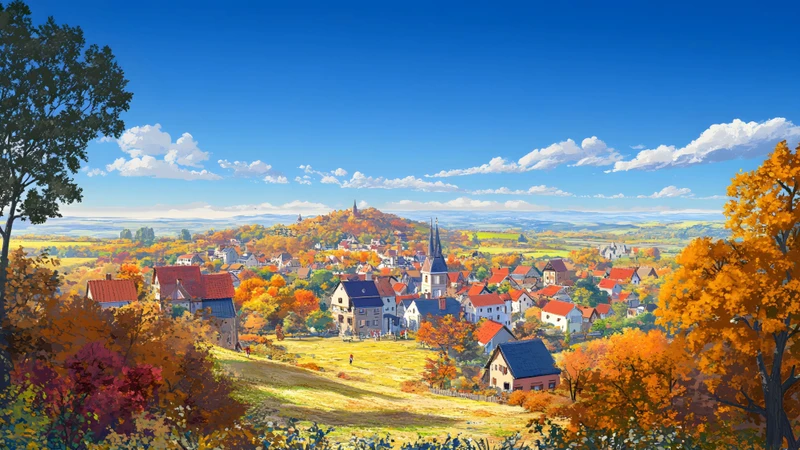
Important note: The wallpaper is merely a catalyst—the real meditation happens in your meeting with yourself. Choose an image that makes you think, "Ah, my shoulders just relaxed." Set it as your desktop today—and begin—not to achieve anything, but to allow yourself to anchor for five minutes in the digital flood.
Related Articles
Maple Rhythm, Mountain Breath: How Chinese Ink-Wash Wallpapers Quiet the Noise — So Your Ideas Can Rise Like Mist Over Peaks
Stuck in a creative rut? It’s not your process—it’s your pixels. Learn how inten...
Your Screen Is a Stress Trigger — Here’s How Anime Landscape Wallpapers Quiet Your Nervous System in Under 60 Seconds
Staring at your screen all day? Discover how carefully chosen nature wallpapers ...
Three Clicks to Calm: How to Choose a Wind-Down Wallpaper That Feels Like Stepping Into a Miyazaki Landscape
You close your laptop after back-to-back Zoom calls—and your screen still feels ...